
Blog Page
Technical Guide to Selecting Resins for Tropical Climate Coatings: Best Resin Types, Performance Criteria, and Application Principles
In equatorial climates, poor resin selection is not a minor inconvenience—it is a structural liability. Moisture ingress and rapid thermal cycling can drastically reduce the shear strength and protective lifespan of industrial coatings, leading to premature failure in critical infrastructure.
At Synresins, we understand these local challenges better than anyone. Proudly East African and manufacturing resins for the East, Central, and Horn of Africa since 1982, we have leveraged over four decades of technical expertise to engineer bespoke resin formulations designed specifically to outlast the harshest tropical environments.
Table of Contents
- 1. Key Takeaways
- 2. Why East African Climates Demand Localized Industrial Coating Resins
- 3. The Core Technical Criteria for Specifying Coatings
- 4. Alkyd Resins for Tropical Climate Coatings
- 5. Polyester Resins: High-Performance Tropical Coatings
- 6. Emulsions & Homopolymers: Sustainable, UV-Resistant Solutions
- 7. Moisture, Humidity, and Application Conditions
- 8. UV Degradation and Photostabilization
- 9. Storage and Logistics Considerations
- 10. Selecting Resins for Specific Infrastructure Applications
- 11. Our Manufacturing Commitment
- 12. Conclusion
- 13. Frequently Asked Questions
1. Key Takeaways
| Question | Answer |
|---|---|
| Which resin performs best in high-humidity tropical coatings? | High-performance polyesters and advanced water-based emulsions lead in high-humidity tropical environments, provided correct application conditions are met. |
| Are alkyd resins suitable for tropical climates? | Yes. Long oil alkyd resins offer excellent flexibility and weather resistance for exterior tropical applications, though they require correct oil-length selection for the specific exposure zone. |
| What is the biggest resin failure risk in tropical climates? | Moisture ingress during application and osmotic blistering in service are the two leading causes of premature coating failure in tropical regions. |
| How does UV intensity affect resin selection in tropical zones? | Tropical UV levels degrade unsaturated bonds rapidly, making UV-stabilized water-based emulsions and high-grade polyesters the preferred choice for exterior finishes. |
| Does storage climate affect resin quality before application? | Critically. Tropical storage conditions can degrade resin quality before it ever reaches the substrate, making temperature and humidity-controlled warehousing essential. |
| What is the role of primers in tropical climate coatings? | Primers formulated with moisture-barrier resins (like short oil alkyds) are non-negotiable for structural applications in high-humidity zones, preventing delamination and adhesion failure. |
| Where can I find East African industrial resin formulations? | Synresins manufactures a full range of Alkyds, Polyesters, Emulsions, and Homopolymers at our Nairobi facility. Browse our full product range for specifications tailored to tropical conditions. |
2. Why East African Climates Demand Localized Industrial Coating Resins
For manufacturers and contractors operating in our region, tropical environments combine stressors that do not appear simultaneously in temperate zones. You are not managing heat or humidity in isolation. You are managing both, continuously, alongside high UV index values, seasonal torrential rainfall, salt-laden coastal air, and biological attack from mold and algae.
Importing generic paint raw materials into Kenya based on European or North American selection frameworks is often a recipe for failure. These foreign standards are technically insufficient for our equatorial context. This is why partnering with a dedicated synthetic resins manufacturer in Kenya who understands these specific environmental demands is a practical operational necessity, not just an academic exercise.
Consider the geographic context we work within daily: East Africa’s climate zones range from the extreme UV exposure of the semi-arid highlands requiring specialized industrial coating resins in Nairobi, to the corrosive, salt-laden humid coastal belts of Mombasa and Dar es Salaam. Each zone presents a distinct combination of temperature cycling, relative humidity, and UV radiation that demands a bespoke resin chemistry answer from an experienced resin manufacturer in East Africa.

The resilient coatings required for East Africa’s infrastructure must address all these variables simultaneously, not as separate design considerations but as an integrated system response.
3. The Core Technical Criteria for Specifying Coatings
Before examining specific resin chemistries, it is important to define the performance criteria we use to evaluate any candidate resin for tropical coating applications. These criteria represent the technical filter through which every resin selection decision at Synresins passes, informed by our 44 years of manufacturing experience and technology standards originally derived from our SYNRES license (1980) and DSM Holland partnerships.
- Moisture Vapor Transmission Rate (MVTR): The lower the MVTR of the cured coating, the better it resists humidity-driven delamination and substrate corrosion.
- Glass Transition Temperature (Tg): In tropical climates where substrate temperatures can exceed 70°C on metal roofs, a resin’s Tg must be well above the anticipated service temperature to prevent softening and flow.
- UV Photostability: Specific polymer backbones yellow and chalk rapidly under intense tropical UV. UV-stabilized emulsions and formulated polyesters are preferred for exterior exposure.
- Hydrolytic Stability: The resin’s backbone must resist bond cleavage by water molecules, particularly in alkaline conditions common over cement substrates.
- Flexibility and Elongation at Break: Tropical thermal cycling causes significant substrate expansion and contraction. Brittle coatings crack, allowing moisture ingress.
- Adhesion to Damp Substrates: Practically speaking, applying coatings to perfectly dry surfaces in a humid tropical environment is frequently not achievable. The resin system must perform under real-world conditions.
- Biological Resistance: Mold, algae, and fungi actively colonize coating surfaces in warm, humid conditions. Resin selection affects how readily a surface supports biological growth.
This infographic highlights five key factors to consider when selecting resins for tropical climate coatings.
4. Alkyd Resins for Tropical Climate Coatings
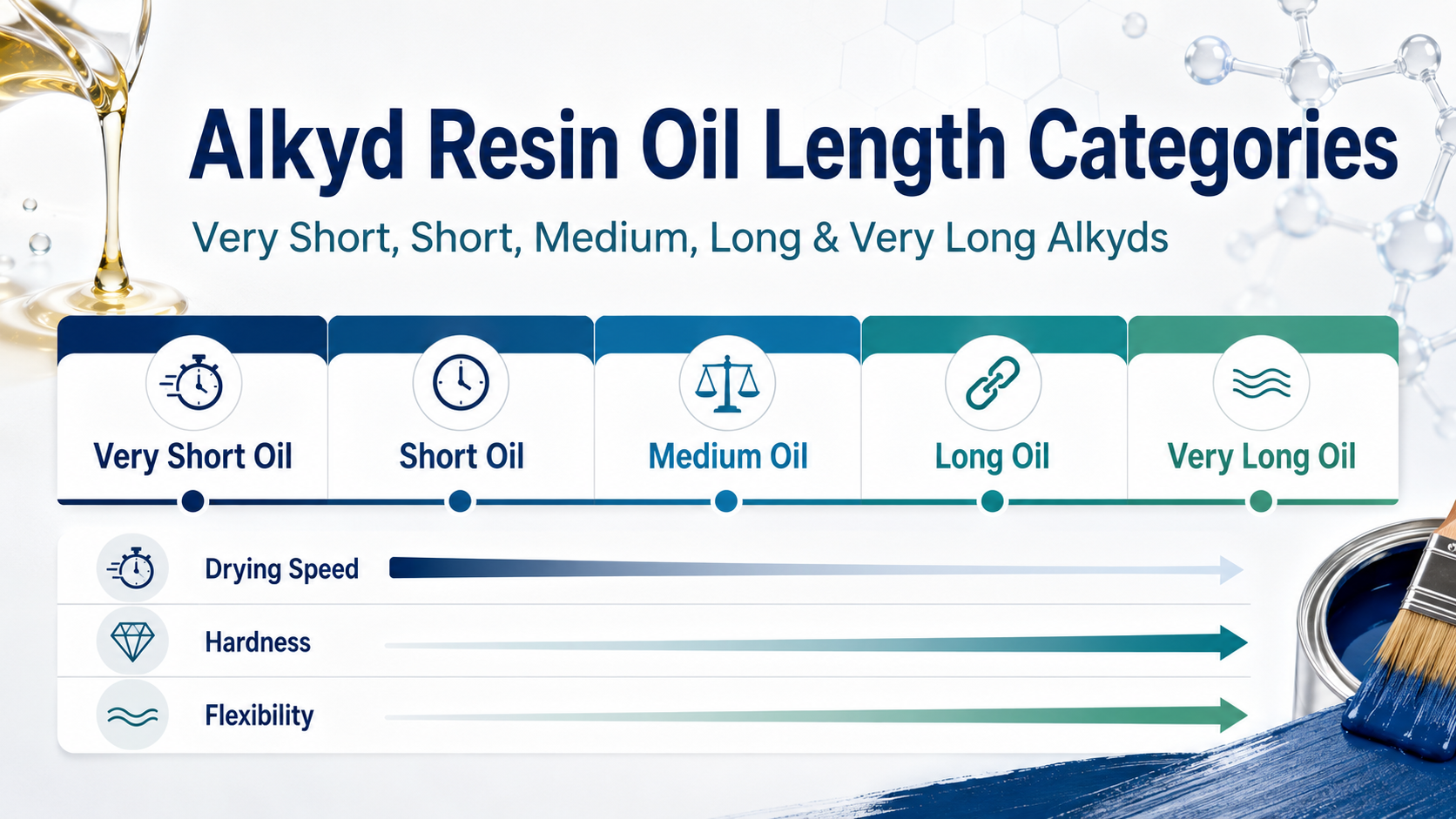
Alkyd resins remain among the most widely used binders in tropical coating systems across East Africa, and for sound technical reasons. Their molecular architecture, built around polyol-polyacid-fatty acid condensation, delivers an inherently flexible film that accommodates substrate movement without cracking.
However, not all alkyd resins perform equally in tropical conditions. The selection of oil length is a critical technical variable that this guide addresses directly.
Long Oil Alkyds in Tropical Exterior Coatings
Long oil alkyd resins (oil length above 60%) deliver superior flexibility and penetration into wood and porous substrates. In tropical conditions where timber undergoes significant moisture cycling, this flexibility is essential to prevent coating cracking and lifting.
Long oil alkyds are best suited to: exterior architectural wood finishes, agricultural implement coatings, and maintenance paints for structures that flex with thermal cycling. Their slower cure rate, often seen as a disadvantage in temperate climates, becomes less of an issue in warm tropical temperatures where oxidative crosslinking proceeds more rapidly.
Short Oil Alkyds in Tropical Industrial Coatings
Short oil alkyd resins (oil length below 40%) deliver harder, faster-curing films with better chemical and abrasion resistance. In tropical industrial coatings on metal substrates, particularly where machinery or structural steelwork requires regular maintenance repaints, short oil systems are technically preferred.
The tradeoff is reduced flexibility. On substrates subject to thermal movement, short oil alkyds may crack at the film level if applied at insufficient film thickness without a flexible primer coat underneath.
Our detailed comparison of long oil vs. short oil alkyd resins for paint formulation provides the specific viscosity, oil length, and drying time specifications relevant to formulators working in tropical production environments.
Did You Know?
A temperature difference of 30°C between the coating surface and substrate can increase water permeation rates by a factor of 10, dramatically accelerating osmotic blistering in tropical infrastructure like pipelines and storage tanks.
Source: Advanced FRP Systems 2024
5. Polyester Resins: High-Performance Tropical Coatings
When industrial environments demand extreme chemical resistance and rapid curing, Polyester resins are a premier choice for heavy-duty protective applications. Highly customizable, polyester systems form a dense, crosslinked matrix offering outstanding chemical resistance, high mechanical strength, and excellent durability that outpaces standard coating systems.
Applying polyester coatings in tropical conditions demands precise technical discipline, particularly regarding catalyst dosing and temperature management. Because polyesters cure via an exothermic reaction initiated by a catalyst, ambient tropical heat significantly accelerates the curing process.
Technical Application Requirements for Polyesters in Tropical Climates
- Substrate temperature: Must be at least 3°C above the dew point temperature at the time of application to prevent moisture from interfering with the crosslinking process.
- Catalyst Management: High tropical temperatures severely reduce pot life. Formulators and applicators must carefully adjust catalyst ratios to ensure adequate working time without compromising the final cure.
- Film build management: Polyester systems are excellent for high-build applications, but in intense heat, applying layers too thickly can cause the exothermic heat to fracture the coating. Controlled, multi-pass applications are recommended.
- Chemical Resistance Profiles: Polyesters are technically preferred for environments exposed to harsh industrial chemicals, making them ideal for food factories, pharmaceutical plants, and high-traffic zones.
For facilities choosing between flooring systems, our analysis of industrial flooring in Kenya covers the substrate, traffic, and chemical exposure variables that determine why polyester is often the optimal, fast-curing system.
6. Emulsions & Homopolymers: Sustainable, UV-Resistant Solutions
The global shift toward sustainable, low-VOC (Volatile Organic Compound) construction materials has made water-based resins essential in East Africa. At Synresins, our Emulsions and Homopolymers (PVA-based) deliver the performance of traditional solvent-based systems while meeting stringent environmental and indoor air quality standards.
Where industrial polyesters lead in chemical barrier performance, advanced acrylic and hybrid emulsions lead in UV stability and architectural longevity. This distinction is technically critical for exterior tropical paints and indoor adhesives.
Water-Based Emulsions in Tropical Climates
Water-based emulsions provide excellent UV photostability, resisting the yellowing and chalking common with older resin technologies. They are highly breathable, allowing trapped substrate moisture to escape—a critical feature for concrete walls during Nairobi’s heavy rain seasons.
Homopolymer (PVA) Adhesives and Sealants
Our PVA-based homopolymers are the backbone of East Africa’s woodwork, joinery, and interior partitioning industries. They offer superior bonding strength and flexibility.
Key technical considerations for Emulsions and Homopolymers in tropical climates include:
- Drying Conditions: While they are water-based, excessively high humidity (above 85%) can retard the evaporation of water, slowing the coalescence of the polymer particles.
- Biological Resistance: Water-based wet systems are susceptible to microbial attack in the can. Proper formulation with in-can preservatives is essential for products stored in hot, humid warehouses.
- Low-VOC Compliance: Emulsions and homopolymers are non-toxic and non-flammable, making them the safest choice for enclosed environments and green building certifications.
Our comprehensive resin and coatings selection guide for East African industrial applications provides detailed resin-by-resin performance comparisons for tropical environments.
7. Moisture, Humidity, and Application Conditions
No comprehensive overview of tropical climate coatings is complete without a dedicated section on the application environment itself. Resin selection and coating formulation account for only part of the performance equation. How and when the coating is applied determines whether the chemistry performs as designed.
We consistently communicate to our customers that 16% of all industrial coating failures are directly attributed to excessive moisture in the substrate or environment during application. This figure is preventable with correct pre-application protocols.
Contractor Checklist: Tropical Application Safe Zones
| Parameter | Target Safe Zone | Danger Zone (Risk of Failure) |
|---|---|---|
| Dew Point Rule | Substrate is at least 3°C (5°F) above Dew Point | Substrate is within 3°C of Dew Point |
| Relative Humidity (Polyesters & Alkyds) | Below 50% – 70% | Above 80% (High risk of trapped moisture and poor cure) |
| Application Timing (Coastal) | Mid-morning (Post-morning dew, before afternoon humidity spikes) | Early morning or late evening peak humidity |
| Surface Prep (Coastal Steel) | ISO Sa 2.5 blast cleaning minimum | Hand-tool cleaning (Leaves chlorides & marine salts) |
- Dew point calculation: Measure air temperature, substrate temperature, and relative humidity before every application session. Apply only when the substrate temperature is at least 3°C above the calculated dew point.
- Surface preparation grading: In tropical environments, surface contamination (chlorides, sulfates from marine air, biological growth) accumulates faster. ISO Sa 2.5 blast cleaning standards should be the minimum for steel substrates in coastal zones.
- Application timing: Avoid application during peak humidity periods, typically early morning and early evening in coastal tropical zones. Mid-morning application windows, when temperature has risen but before afternoon storm humidity peaks, are generally optimal.
- Drying and curing time adjustments: Tropical temperatures accelerate solvent evaporation but can also trap solvents in fast-skinning films. Follow the resin supplier’s temperature-adjusted drying schedules, not standard temperate-climate guidelines.
8. UV Degradation and Photostabilization
UV radiation at tropical latitudes is significantly more intense than at temperate latitudes, both in daily duration and in UV-B flux. This single factor drives the most significant divergence between resin selection for tropical versus temperate coating applications.
Coatings in intense UV environments like the East African coast or the high-altitude Kenyan highlands typically require recoating every 10 to 15 years, compared to 20 or more years in moderate climates. This maintenance cycle difference has direct lifecycle cost implications that must inform resin selection from the outset.
Did You Know?
Coatings in intense UV environments like the East African coast or the high-altitude Kenyan highlands typically require recoating every 10–15 years, compared to 20+ years in moderate climates, significantly increasing lifecycle maintenance costs for local infrastructure projects.
Source: High Performance Coatings 2026
Resin-Level UV Resistance: A Technical Comparison
| Resin Type | UV Resistance | Chalking Risk | Best Tropical Use Case |
|---|---|---|---|
| UV-Stabilized Polyester | Excellent | Very Low | Exterior industrial components, heavy-duty machinery |
| Water-Based Emulsion | Good | Low-Medium | Exterior architectural walls, eco-friendly finishes |
| Long Oil Alkyd | Moderate | Medium | Wood, general exterior maintenance paints |
| Short Oil Alkyd | Low-Moderate | High | Interior industrial coatings, quick-dry primers |
The technical implication for tropical coating system design is clear: specific polymers require layering to succeed. Short oil alkyds function best as tough primers, while UV-resistant emulsions or modified polyesters should form the UV-exposed topcoat layer.
9. Storage and Logistics Considerations
A comprehensive tropical resin selection guide must also address a dimension that is frequently overlooked: the period between manufacturing and application. In tropical logistics environments, resins can be severely compromised before they ever reach the applicator’s roller or spray gun.
Maintaining relative humidity below 40% during storage can extend resin shelf life by up to 30% compared to storage under standard humid conditions. For resins distributed across East and Central Africa’s 10-plus country supply chains, this is an operational imperative, not a theoretical point.
Storage Best Practices for Tropical Resin Distribution
- Temperature-controlled warehousing: Polyester resins and solvent-based alkyds stored above 29°C (85°F) for extended periods undergo premature aging, viscosity increase, and potential crosslinking. Tropical ambient temperatures frequently exceed this threshold without deliberate climate control.
- Water-based emulsions: These must be stored away from extreme temperature fluctuations to prevent phase separation and biological degradation. Proper sealing is paramount.
- Drum orientation: Sealed drums should be stored bung-up to minimize the risk of moisture ingress through mechanical seals.
- FIFO stock rotation: First In, First Out discipline is essential for resin batches in tropical distribution networks where shelf life is shorter than temperate market standards.
At our Nairobi facility on Lunga Lunga Road, we operate a dedicated Tank Farm infrastructure built between 2011 and 2015, combined with Dedicated Reactors installed in 2020, specifically to prevent cross-contamination and maintain batch integrity under East Africa’s climate conditions. Our 90%+ OTIFEF (On Time In Full Error Free) delivery rating reflects the operational rigor we apply to every dispatch.
10. Selecting Resins for Specific Infrastructure Applications
A technical guide must translate chemistry into application context. The following breakdown covers the most common tropical infrastructure coating challenges we address across East and Central Africa.
Roofing and Building Envelope Coatings
Metal roofs in tropical environments face the most extreme combination of stressors: peak surface temperatures above 80°C, UV degradation, rapid thermal cycling between day and night, and regular acid rainfall in urban industrial zones.
We recommend a system approach for tropical roofing: a highly cross-linked short oil alkyd primer for outstanding metal adhesion, followed by a UV-resistant water-based emulsion topcoat for maximum flexibility, weatherability, and reflectivity. Our experience protecting Nairobi’s roofing infrastructure with specifically formulated systems is covered in our guide on how we protect Nairobi roofs with correctly specified coating systems.
Industrial Floor Coatings in Tropical Facilities
Factory and warehouse floors in tropical climates face moisture rising from below (rising damp), thermal expansion, chemical spills, and heavy traffic simultaneously. Polyester systems offer rapid curing and unmatched chemical and abrasion resistance in this multi-stress environment, making them ideal for food factories and high-traffic zones.
Structural Steel and Anti-Corrosion Systems
Coastal and high-humidity tropical zones are aggressive corrosion environments. Chloride-laden air at the East African coast, particularly around Mombasa and Dar es Salaam, accelerates steel corrosion dramatically compared to inland highland locations.
High-performance short oil alkyd primers, followed by specialized polyester mid-coats and durable emulsion topcoats, represent a reliable, localized system for structural steel protection. Film thickness verification at each stage is non-negotiable.
Our guide to how protective coatings extend equipment lifespan provides the operational and lifecycle cost data that justifies correct resin system investment for tropical industrial infrastructure.
11. Our Manufacturing Commitment
Understanding tropical coating chemistry at the specification level is one thing. Receiving consistent, accurately formulated resin batches that match specification sheet to production reality is another. This is where our manufacturing process directly supports every technical decision you make from this guide.
As East and Central Africa’s largest resin manufacturer, we produce high-capacity volumes at our Nairobi facility, using advanced ERP systems for precise formula management. Every batch is managed against our “100% Quality Right First Time” standard, meaning formula accuracy, viscosity, acid value, and color are strictly verified before any material leaves our production floor.
Our dedicated team of technical specialists and chemical scientists continuously apply Kaizen and Lean improvement principles to our formulation and manufacturing processes. This is not just a management policy at Synresins; it is embedded in the daily practice of every person on our production floor and in our laboratory.
We export to over 10 countries across East and Central Africa, and we understand that tropical climate coatings in Kigali face different humidity profiles than those in Mombasa or Kampala. Our formulations are developed with this regional specificity in mind, not as generic products retrofitted to a tropical market.
You can review our full resin and coating range, including alkyds, polyesters, homopolymers, and emulsions, through our product catalog.
12. Conclusion
This technical guide covers the full spectrum of technical decisions that determine whether a coating system succeeds or fails in East Africa’s demanding environments. From resin chemistry selection and oil-length optimization to application condition management, UV stability, and storage logistics, every variable in the tropical coating equation matters.
The central technical principles from this guide can be summarized as follows: match your resin chemistry to your specific tropical exposure zone, never compromise on application condition monitoring, design your coating system in layers with each resin type performing its intended role, and select a resin manufacturer who understands the regional conditions in which their materials will ultimately be used.
At Synresins, Excellence Since 1982, we bring 44 years of manufacturing expertise, world-class technology origins, and deep East African market knowledge to every technical recommendation we make. We are not just a resin supplier. We are your technical partner in building coatings that perform for the long term in the world’s most demanding climate zones.
Contact us to discuss your specific tropical climate coating challenge, or explore our strategic outlook for industrial coatings in East Africa through 2030 to understand where resin technology is heading in our region.
13. Frequently Asked Questions
What is the best resin for tropical climate coatings where humidity is consistently above 80%?
In persistently high humidity above 80%, high-performance polyester resins and specialized solvent-based alkyds are the best choice for barrier coats, as they tolerate substrate conditions better when applied within the correct dew-point windows. For topcoats in the same environment, advanced water-based emulsions provide excellent UV stability and breathability required for long-term tropical performance.
How does tropical heat affect resin curing and film quality?
Tropical temperatures above 30°C significantly accelerate polyester and alkyd curing, shortening pot life and overcoating windows. This requires smaller mixed batch sizes, faster application techniques, and careful temperature-adjusted scheduling to avoid problems such as solvent entrapment and insufficient film build in a single application pass.
Is this technical guide to selecting resins for tropical climate coatings relevant for coastal versus highland tropical zones?
Yes, and the distinction is important. Coastal tropical zones add chloride-laden marine air and corrosion category C4-C5 conditions to the standard humidity and UV challenges, requiring robust barrier primers and heavier film builds. Highland tropical zones, such as Nairobi at 1,700m, have lower humidity but intense UV, shifting the priority toward UV-stable emulsion topcoats.
Which resin type offers the longest maintenance cycle for tropical exterior infrastructure in 2026?
In 2026, properly specified UV-stabilized polyester systems and high-grade acrylic emulsions applied over appropriate primers deliver the longest maintenance cycles for tropical exterior infrastructure. Comparative data shows these tailored systems significantly outperform generic formulations in gloss retention and corrosion protection under tropical conditions.
Can alkyd resins be used for tropical industrial coating applications or are they only suitable for architectural paints?
Alkyd resins are highly versatile. While long oil alkyd resins are well-suited to architectural and wood coatings, short oil alkyd resins are technically superior for industrial applications involving fast-drying machinery primers and interior structural steel protection.
What storage temperature should I maintain for resins in a tropical warehouse to prevent quality degradation?
Resins should be stored below 29°C (85°F) wherever possible in tropical warehousing environments, as sustained temperatures above this threshold cause premature crosslinking, viscosity increases, and aging in solvent-based systems. Water-based emulsions must also be shielded from extreme heat to prevent separation. Where ambient temperature cannot be controlled, FIFO stock rotation is the most practical quality-protection measure.
How do I know if a resin supplier understands tropical climate coating requirements versus just selling standard formulations?
A technically credible supplier will provide application data sheets with humidity and temperature application windows, not just standard temperate guidelines, and will be able to discuss film thickness recommendations by climate zone and specific tropical failure modes like osmotic blistering. At Synresins, our technical recommendations are built on 44 years of East African manufacturing experience and direct involvement with tropical infrastructure projects.
Ready to Optimize Your Tropical Coating Formulation?
Don’t leave your product quality to chance. Contact Synresins today for a technical consultation or to request samples of our high-performance Alkyds, Polyesters, Homopolymers, and Emulsions.
Contact Synresins Limited
Phone:+254 735 777 704 / +254 713 783 399
Email:info@synresins.com
Location: 18725 Lunga Lunga Road, Industrial Area, Nairobi, Kenya.